25 Coolest Gifts for Grandchildren in 2026
Why Selecting the Right Toys Matter Choosing the right toys is essential for...

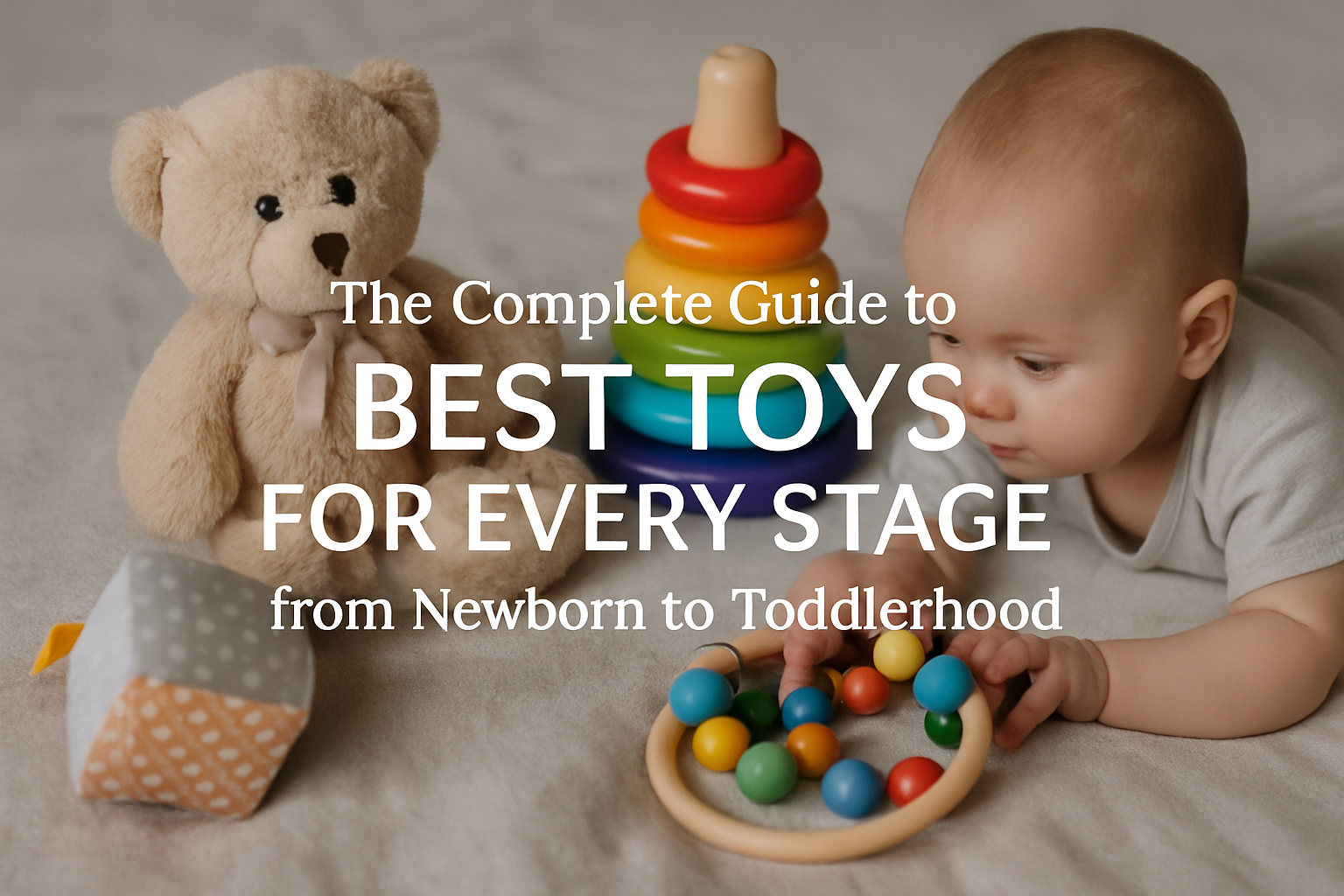

Choosing the right toys is essential for a child's development from newborns to toddlers. In the early months, sensory exploration plays a vital role as infants encounter various textures, sounds, and colors. Toys designed with high-contrast patterns cater to newborns' developing eyesight, stimulating visual tracking skills and encouraging engagement. Sensory-rich toys not only captivate a baby's attention but also provide opportunities for them to explore and experiment with their environment, paving the way for cognitive growth.
As infants grow, the focus shifts toward enhancing motor skills. Toys that encourage grasping, shaking, and pushing help develop fine and gross motor skills. For instance, rattles stimulate grasp reflexes, while soft plush toys provide comfort and security, aiding in emotional attachment. Play mats and activity gyms create a safe space for tummy time, fostering mobility as babies learn to roll over and crawl. Thus, toys serve not just as entertainment but as critical tools that assist in motor skills development during a baby's formative stages.
Moreover, the cognitive engagement provided by toys is equally important. Interactive and multi-functional toys can facilitate problem-solving and creative thinking, allowing toddlers to engage in imaginative play. When children play with toys that encourage storytelling or role-playing, they learn to navigate social interactions, negotiate roles, and develop empathy. This emotional connection to their toys fosters a sense of belonging and security, crucial for emotional development. Hence, selecting the right toys is essential not only for sensory and motor skill development but also for building cognitive capacities and nurturing emotional health in children.
The early stages of a child's life are critical for development, and selecting the right toys can significantly enhance their growth. High-contrast toys are essential for this age group because they stimulate infants' eyesight. Their vision is still developing, and these toys help capture their attention, encouraging visual tracking. Examples of high-contrast items include soft blocks or patterned rattles that can engage a newborn’s focus and curiosity.
Soft plush toys provide a comforting presence, offering infants a sense of security. These cuddly companions are perfect for snuggling and often become treasured items as children grow. The gentle textures of these plush toys help soothe babies and provide comfort during their early days, especially during naptime or when they feel anxious.
Moreover, play mats and activity gyms create a designated safe space for babies to spend time on their stomachs, crucial for tummy time. This activity encourages mobility, strengthens the neck and shoulder muscles, and promotes motor skill development. Musical toys are also beneficial as they have soothing effects, stimulating auditory senses and creating a calming atmosphere. Additionally, bath toys can transform bath time into a fun sensory experience, encouraging interactive play. Textured toys are particularly important as they encourage tactile exploration, while rattles engage infants through grasping, supporting their developing motor skills. Lastly, mobiles serve as a source of visual stimulation, promoting visual tracking skills and providing an engaging visual experience that attracts a newborn’s gaze.
For infants in the 0-6 months range, specific toys are designed to promote both physical and cognitive development. A tummy time mirror is a wonderful addition to any playtime routine; it not only strengthens neck muscles but also enhances visual tracking. As babies lie on their stomachs, they are motivated to lift their heads and engage with their reflection, thereby developing core strength and spatial awareness.
High-contrast books are another tool for early visual engagement, designed to captivate infants' attention while laying the groundwork for language development. The simple images and patterns help stimulate a baby's brain and feed their curiosity. Rattles also play a vital role during these months as they build grip strength and provide tactile stimulation. The act of shaking, grasping, and learning to control these objects can greatly enhance motor skills.
Furthermore, musical mobiles can stimulate infants' hearing, encouraging sound exploration. The soothing music not only creates a calming environment for sleep but also introduces babies to rhythms and melodies, which are fundamental aspects of cognitive development. Engaging with different types of sounds can enhance their auditory perception and may contribute to early learning skills as they grow.
When selecting toys for newborns, several developmental features should be taken into account. Textures, sounds, and colors are vital as they significantly enhance sensory and motor development. Toys that incorporate various textures enable tactile exploration, helping infants understand and differentiate between different sensations. Bright colors are effective in capturing their attention, prompting visual engagement and curiosity.
Safety is of utmost importance, as infants are naturally inclined to explore their world using their mouths. Therefore, it is crucial that all toys are made from non-toxic materials and have no small parts that could pose a choking hazard. Ensuring that toys are safe allows infants the freedom to explore without risk.
Finally, tummy time toys such as activity gyms and mats play an essential role in promoting movement. These toys encourage infants to practice rolling, crawling, and other motor functions, fundamental to their physical development. Encouraging exploration at this early stage supports overall growth and lays a solid foundation for future developmental milestones. The right toys not only provide entertainment but also contribute significantly to an infant's sensory and motor development.
Selecting toys for infants aged 6 to 18 months requires careful consideration of their developmental milestones. At this age, babies are becoming increasingly curious and engaging in exploratory play. One effective type of toy is designed with textured rings that have the added benefit of suction capabilities, ensuring they stay put during playtime. These toys provide infants with opportunities to explore various textures and develop their fine motor skills, which are essential for future hand-eye coordination.
Another engaging choice includes chunky blocks that encourage problem-solving. These blocks are designed to fit snugly in tiny hands, making it easy for babies to grasp and maneuver them. As babies manipulate these blocks, they learn about spatial relationships and cause-and-effect, all while fostering their cognitive development. The interaction with such toys can be mesmerizing, capturing their focus and encouraging prolonged engagement.
Sensory play is vital during this stage, and toys that feature interactive sensory bubbles can keep babies captivated while promoting sensory exploration. As infants press down on these bubbles, they experience different tactile sensations and sounds, enriching their sensory experience. Additionally, stacking toys that introduce visual tracking support motor skills and help in developing depth perception as the baby learns to stack pieces and observe their surroundings simultaneously. These types of toys not only stimulate physical abilities but also nurture intellectual curiosity.
When choosing toys for babies, it is essential to focus on their developmental needs, particularly how these toys facilitate exploration and fine motor skills. Toys that promote movement and manipulation allow infants to engage with their environment actively. Parents should look for toys that can encourage reaching, grasping, and movement, as these are fundamental skills that require practice during this stage of development.
Sensory-focused toys are particularly beneficial for this age group. Toys with vibrant colors, varied textures, and interesting shapes can stimulate an infant's senses and enhance cognitive development. Engaging all of a baby's senses is crucial; it encourages them to touch, taste, and even listen, laying the groundwork for more complex learning in the future. Toys that feature contrasting colors can draw an infant's attention, while those with different textures can invite touch, promoting tactile exploration.
Choosing the right toys for toddlers can significantly influence their development. For 1-year-olds, highlight toys that encourage exploration and creativity. Board books play a vital role in language development and can captivate their attention with colorful pictures and simple stories. Creative play materials, such as stacking blocks or shape sorters, promote fine motor skills. Toys that encourage pretend play, like simple dolls or animal figures, allow toddlers to engage in imaginative scenarios. Building toys, such as interlocking blocks, foster spatial awareness and problem-solving abilities. Additionally, muscle development toys, including push toys or ride-on vehicles, help toddlers improve their gross motor skills while having fun.
As children progress to 2 years old, their play becomes more complex. At this stage, problem-solving toys become essential. Puzzles, for instance, enhance critical thinking as toddlers learn to fit pieces together. Pretend and build toys expand their imaginative play further, allowing them to create their own little worlds. Creative activities, such as coloring or playdough, stimulate artistic expression and dexterity. Moreover, introducing balls for physical play can enhance coordination and encourage active play. These toys not only facilitate skill-building but also help in social interactions when toddlers engage in play with peers.
Selecting age-appropriate toys is crucial for healthy development. It’s not just about entertainment; the right toys can support cognitive, physical, and emotional growth. For toddlers aged 1-3, the focus should be on toys that are safe, stimulating, and can grow with them. As children explore their environment and learn new skills, providing varied and engaging toys can make a significant difference in their play and learning experiences.
When it comes to toddler toys, safety should always be the top priority. It's essential that all toys are well-made and constructed from non-toxic materials, as toddlers tend to explore their world with their mouths. Ensuring that the toys are suitable for the child’s age ensures they can engage without risks. Parents should look for toys designed specifically for toddlers, which are less likely to have small parts that pose choking hazards. Additionally, toys should be free from sharp edges or any other potentially dangerous components, promoting a safe play environment.
Regular maintenance of toys is also a key safety measure. Parents should perform routine checks to assess wear and tear. Over time, toys can get damaged, leading to safety hazards. Look for any signs of fraying, chipping, or deterioration that could pose a danger to a child. If a toy shows signs of damage, it’s best to discard it rather than risk your child’s safety. Keeping toys clean is another vital aspect of safety, as toddlers are prone to putting toys in their mouths. Regular washing or sanitizing helps prevent the spread of germs and illnesses.
In summary, ensuring that toys are both safe and suited to a child's developmental stage lays the groundwork for secure play. By selecting high-quality toys and maintaining them properly, parents can provide an engaging yet safe play experience for their toddlers. Engaging with age-appropriate toys while prioritizing safety not only aids in development but also gives parents peace of mind.
Selecting the right toys for children is integral to fostering their development across various stages of growth. Age-appropriate toys are designed to be both engaging and educational, providing children with opportunities to learn while they play. At every developmental milestone, children have unique needs that can be effectively supported by thoughtfully chosen toys. For instance, infants benefit from toys that stimulate their senses with bright colors, varying textures, and soothing sounds, while toddlers may thrive with toys that encourage movement, problem-solving, and interaction. Understanding these developmental stages allows caregivers to create an environment where children can explore, learn, and grow safely.
Choosing toys that positively impact developmental milestones is paramount. For babies, toys that promote sensory exploration, such as rattles and soft blocks, help in developing motor skills and sensory awareness. These toys encourage reaching, grasping, and shaking, which are essential for hand-eye coordination. As children transition into toddlerhood, toys that promote imaginative play, such as blocks or simple role-play sets, become vital. They foster creativity and cognitive development while also enhancing fine motor skills as children manipulate pieces to create their own elaborate structures or scenarios. In preschool years, educational toys that incorporate basic math or literacy concepts help prepare children for school by building foundational skills in a fun and engaging way.
In addition to enhancing developmental milestones and ensuring safety, it is vital to consider the variety of learning styles and interests children may have. Children are not one-size-fits-all when it comes to play; thus, offering a diverse range of toys can cater to different inclinations and enhance the overall play experience. From musical instruments that can foster an early love for music to art supplies that allow children to express their creativity, the options are limitless. By selecting a range of age-appropriate toys that encompass various learning styles and developmental needs, caregivers can significantly impact a child's growth and prepare them for the many challenges and joys of childhood.
Play is an essential component of childhood, serving as a vehicle for learning and growth. Through play, children engage in a world of exploration and discovery, which significantly contributes to their overall development. The benefits of play can be categorized into various developmental areas: cognitive, motor skills, social, and emotional development.
Cognitive development is profoundly influenced by play, particularly through the interaction children have with toys and other play materials. These interactions allow children to explore their environment, fostering an understanding of the world around them. For instance, when children manipulate objects, they learn about cause and effect, spatial relationships, and basic physics principles. Engaging with puzzles, building blocks, or role-playing scenarios also helps hone their problem-solving skills. As they navigate challenges during playtime, children develop critical thinking and intellectual curiosity.
Moreover, imaginative play serves as a foundation for creativity and innovative thinking. By engaging in pretend scenarios, children learn to visualize different outcomes, engage in storytelling, and develop their capacity for fantasy. This kind of cognitive engagement not only enhances their ability to think creatively but also prepares them for future academic challenges. As they negotiate rules and engage in complex play narratives, children practice and refine their cognitive skills, which sets a strong foundation for lifelong learning.
In essence, the role of play in enhancing cognitive skills cannot be understated. It is through play that children learn to explore ideas, reflect on their experiences, and develop their thought processes. The playful interactions significantly contribute to the cognitive scaffolding required for more structured learning in later childhood.
Physical play is another critical aspect of early childhood development, particularly for enhancing both gross and fine motor skills. As children engage in activities that require movement, such as running, jumping, climbing, or dancing, they build their gross motor skills, which involve large muscle groups and overall body coordination. Activities that encourage running or climbing help strengthen muscles and improve coordination, balance, and agility. Through such playful physical activities, children also develop an awareness of their body in space, which is essential for their physical development.
On the other hand, fine motor skills are cultivated through play that involves more precise and intricate movements. Activities like drawing, building with small blocks, or playing with clay require dexterity and hand-eye coordination. These activities allow children to refine their hand movements, which are crucial for tasks such as writing and self-care routines later in life. Engaging in these types of play is vital for developing the coordination needed for fine motor tasks.
In conclusion, motor skills development through playful activities provides children with the physical tools they need for everyday functions and tasks. The interplay of active and creative play is essential for ensuring children grow stronger and more coordinated, setting the stage for their future physical activities and participation in sports or games.
As children engage in play, they also embark on a journey of social development. Cooperative play, characterized by children working together towards shared goals or participating in group activities, serves as a primary context for learning valuable social skills. Through this collaborative form of play, children learn negotiation skills, essential for interacting with peers. They practice sharing resources and taking turns, which helps in developing patience and understanding the perspectives of others.
This social engagement also provides children with opportunities to establish friendships. As they play together, children experience emotions like empathy and compassion for their friends, reinforcing the bonds they create. Engaging in group play scenarios allows them to practice conflict resolution and understand social hierarchies. They learn to express their feelings appropriately and respond to the emotions of others, creating a supportive social environment.
Additionally, through the dynamics of group play, children gain confidence in their social interactions. This foundation prepares them for future relationships, both in school and beyond. The skills acquired during playful interactions are invaluable, equipping children with the ability to navigate social situations throughout their lives.
Play significantly contributes to emotional development by providing children a safe space to express their feelings and learn emotional regulation. Engaging in various types of play allows children to experiment with different emotions, such as joy, sadness, anger, and fear, in a secure environment. In fantasy play, for instance, children can act out scenarios that reflect their real-life emotions, helping them to understand and articulate their feelings better.
Additionally, through play, children learn the concept of emotional regulation. They practice calming themselves and managing frustration when a game does not go as planned or when they face challenges. Through these experiences, they develop resilience and coping strategies, crucial skills for emotional well-being. These lessons translate into real-life situations, where children learn to handle their feelings effectively without resorting to negative behaviors.
In summary, the emotional growth fostered through play is vital for children's overall development. It equips them with the necessary tools to build strong relationships, manage their feelings, and navigate the complexities of life. Thus, play is not just an activity; it is a fundamental element in shaping emotionally intelligent and resilient individuals.
Imaginative play is fundamental to a child's development, allowing them to explore their creativity, build narrative skills, and develop essential social abilities. Certain types of toys are particularly effective in fostering this type of play. These toys encourage children to engage in role-playing, problem-solving, and collaborative storytelling, significantly enhancing their cognitive and emotional growth.
Play kitchens serve as an excellent platform for role-play and creative storytelling. When children engage in cooking and serving meals, they often mimic the actions they observe in adults, thus creating a world where they can experiment with various social roles. This type of play allows them to practice language skills, improve their vocabulary, and enhance their understanding of routines and responsibilities associated with household roles. Furthermore, it enables kids to express their thoughts and emotions creatively, making connections between their experiences and the scenarios they envision.
Magnatiles, or similar geometric building sets, engage toddlers in constructing their designs, tapping into their spatial awareness. With these types of toys, children can manipulate shapes and structures, experimenting with balance and stability as they create their visions. The process not only fosters critical thinking but also nurtures fine motor skills as they grasp, connect, and build. Additionally, such building activities encourage collaborative play when children work together to design elaborate structures, reinforcing teamwork and communication skills.
Lastly, wooden blocks offer an open-ended play experience that supports both creativity and fine motor skills. As children stack, sort, and design with blocks, they learn about balance, gravity, and the principles of construction. The physical manipulation of blocks also aids in enhancing dexterity, which is important for younger children. By building whatever they imagine, children streamline their cognitive processes and materialize their creative ideas into tangible structures. This versatility with blocks empowers children to express their unique imaginations while reinforcing crucial developmental skills.
In summary, the right toys can effectively inspire creativity in children, transforming playtime into a valuable learning experience. Through imaginative play, children explore the world around them, engage with diverse narratives, and develop important skills that will aid their growth well into the future.
Sensory toys are specifically designed to engage an infant's senses: sight, sound, touch, and taste. These toys are not just mere objects for play; they serve a deeper purpose in stimulating cognitive and physical development. Bright colors and varied textures captivate the visual senses, while soft sounds and various shapes appeal to auditory awareness. By engaging multiple senses simultaneously, sensory toys provide a rich input that can help infants make connections with their surroundings, contributing to a well-rounded developmental experience.
Additionally, sensory toys are essential for promoting sensory play during crucial growth stages. During the first few months of life, infants begin to explore their environment primarily through their senses. This exploration is vital as it lays the foundation for future cognitive skills. Sensory toys encourage this exploration by enticing infants to reach, grasp, and manipulate objects. The tactile feedback they provide helps infants develop motor skills while also enhancing their ability to perceive different stimuli. As infants engage with these toys, they learn about cause and effect, which is fundamental to their understanding of the world around them.
In summary, sensory toys cater to the natural curiosity of infants and are a crucial component in facilitating sensory play. By providing a multi-sensory experience, they not only entertain but also play an integral role in early developmental milestones, thus fostering an environment where infants can learn, grow, and thrive.
The significance of sensory play cannot be overstated. Sensory toys entertain while simultaneously enhancing developmental skills. Engaging with various fun and stimulating textures, sounds, and visuals allows infants to develop essential motor skills. These activities are not just passive experiences; they require the infant to reach, grasp, and hold, which are all integral actions for physical development. Such engagement nurtures coordination and dexterity, helping to strengthen muscle control and spatial awareness in infants as they interact more purposefully with their environment.
Moreover, sensory play significantly enhances cognitive abilities by teaching cause and effect. When infants manipulate sensory toys, they begin to understand the relationship between their actions and the outcomes. For instance, shaking a toy might produce sound, or rolling a colorful ball may lead to it bouncing back. These interactions help infants grasp fundamental concepts that will be essential as they continue to grow and learn. The ability to predict outcomes and respond to them builds critical thinking skills that will support their cognitive development into later stages.
Crucially, sensory play encourages engagement through manipulation, fostering confidence through exploration. When infants freely experiment with various toys, they become more comfortable in their surroundings. This sense of security empowers them to explore further, resulting in a natural inclination to learn. As they navigate through different textures and sounds, infants learn to trust their instincts and abilities. This empowerment through exploration builds resilience, laying the groundwork for a lifetime of learning and discovery. In essence, sensory play is a foundational aspect of development that supports various skills essential for growth.
The importance of eco-friendly toys for infants and toddlers cannot be overstated. These toys are meticulously designed with safety and sustainability in mind, ensuring that not only are they enjoyable for little ones, but they are also safe for the environment. Many eco-friendly toys are crafted from natural materials, such as organic cotton, bamboo, or sustainably sourced wood. This emphasis on sustainable materials helps to minimize the ecological footprint often associated with traditional plastic toys, which can take hundreds of years to decompose in landfills.
Furthermore, eco-friendly toys conform to rigorous safety standards, offering parents peace of mind. These toys undergo extensive testing to guarantee that they do not pose choking hazards or contain sharp edges. Most importantly, eco-friendly toys are manufactured without harmful substances such as BPA, phthalates, or other toxic chemicals that may leach into the environment or adversely affect children's health. Parents can feel confident that their children are playing with products that prioritize safety and well-being.
As awareness about environmental issues grows, the demand for eco-friendly alternatives in all areas of life has surged, including children's toys. This shift in consumer preference has encouraged manufacturers to innovate and produce a broader range of sustainable options. Consequently, eco-friendly toys are becoming accessible to more families, allowing parents to make informed choices that reflect their values regarding health and environmental stewardship.
There is an increasing number of toy brands focusing on eco-friendly options, contributing to a diverse marketplace of safe and sustainable toys. These brands prioritize transparency in their production processes, often sharing information about sourcing, materials, and labor practices with customers. By offering a variety of toys, from plush figures to building blocks, these companies cater to the different developmental stages and preferences of infants and toddlers.
This burgeoning selection serves as encouragement for eco-conscious choices among parents who are keen to support sustainable practices while providing their children with enriching play experiences. Many environmentally friendly brands embrace innovative designs that spark imagination and creativity, encouraging open-ended play that is essential for childhood development. The more diverse the products available, the easier it becomes for parents to choose toys that align with their commitment to sustainability.
In conclusion, the rise of eco-friendly toys for infants and toddlers signifies a positive trend towards prioritizing healthy play, mindful consumption, and environmental well-being. As parents become increasingly aware of their purchasing power, supporting brands that focus on sustainability can pave the way for a healthier planet while nurturing the next generation with safe and enriching toys.
Organizing toys efficiently can transform a chaotic play area into a structured environment that promotes creativity and learning. When arranging a toy collection, categorization is key. One effective strategy is to organize toys by age, type, and activity. This approach not only helps caregivers find items quickly but also ensures that toys are developmentally appropriate for each child's needs. For instance, toys intended for infants often differ greatly from those suited for toddlers or preschoolers, highlighting the importance of aligning toys with children's developmental stages.
When categorizing by type and activity, consider breaking toys into groups such as building blocks, creative arts and crafts, and educational games. This not only allows for easier access but also encourages children to engage with different types of play. For example, grouping all art supplies in one container ensures that creative activities are accessible, fostering imaginative play without the added step of searching through mixed piles of toys. Establishing designated spaces for each category can significantly enhance the overall play experience and encourage independent exploration among children.
Another vital aspect of maintaining an organized toy collection is the use of containers that provide ease of access. Clear bins or labeled boxes can help keep toys tidy and easy to identify. This solution allows children to learn responsibility as they can visually see where each toy belongs, promoting habits of tidiness from an early age. Additionally, using stackable storage containers can save space while maintaining visibility of contents. Regular maintenance of the toy organization is necessary as children grow and their interests evolve. Periodically assessing the toy inventory helps remove items that are no longer age-appropriate or that have fallen out of favor, ensuring the collection remains relevant and engaging. This ongoing process keeps the play area manageable and fosters a focus on developmentally beneficial toys, making playtime both enjoyable and conducive to learning.
Understanding the role of toys in early childhood development cannot be overstated. Parents recognize that selecting the right toys can foster physical, cognitive, and social skills in infants and toddlers. Engaging toys stimulate curiosity and encourage exploration, which are vital aspects of a child's growth. For instance, toys that promote fine motor skills, such as stacking blocks or shape sorters, can significantly aid in a child's developing hand-eye coordination. Research indicates that interactive toys can enhance cognitive capabilities, prompting critical thinking and problem-solving. Parents frequently recommend toys that are not only entertaining but also serve a developmental purpose.
Safety is a paramount concern for parents when it comes to toy selection. Many opt for toys made from non-toxic materials and ensure that items are age-appropriate to minimize choking hazards. Reviews often highlight the importance of reading labels and adhering to safety standards. Parents are vigilant about checking for small parts and sharp edges that could pose risks. Furthermore, they appreciate information on the durability of toys, as long-lasting products do not only prove to be cost-effective but also safe for repeated use over time. In this context, many parents share experiences about how certain materials and designs have led to peace of mind, underscoring the need for thorough research before making a purchase.
Best practices for choosing toys also surface frequently in parent discussions. Many advocate for a balance between educational and playful aspects of toys. They suggest combining items that promote physical activity, like balls or ride-on vehicles, with those that spark creativity, such as art supplies or role-playing sets. Parents emphasize the importance of diversity in play to cater to different developmental stages and personal interests. By observing their children's interactions with various toys, many parents identify preferences that guide future purchases. Overall, shared insights from parents encourage a thoughtful approach to toy selection, one that prioritizes both enjoyment and developmental benefits.
Multifunctional toys hold tremendous appeal for both parents and children due to their ability to adapt as a child develops. One key characteristic of these toys is their ease of use. They are designed with intuitive features that allow young children to engage with them without heavy reliance on adult supervision. This simplicity not only encourages independent play but also fosters a sense of accomplishment in children when they navigate the toy's functions on their own. For parents, this means less hassle and more time for other responsibilities, knowing that the toys their children are playing with are safe and user-friendly.
In addition to ease of use, the versatility of multifunctional toys plays a significant role in enhancing imaginative play. These toys often come with multiple components or can transform into different configurations, sparking creativity in how children choose to play with them. From building and constructing to role-playing and problem-solving, these toys offer a variety of play scenarios that cater to a child's evolving interests. The ability to switch between different modes or uses means that children are less likely to tire of a toy as they grow. Instead, they can continuously find new ways to engage, which not only keeps playtime fresh but also supports cognitive development.
As children grow, the complexity of their play needs changes. Multifunctional toys are designed to adapt to these changing needs with adjustable features that increase in complexity. For instance, a toy might start as a simple stacking tool for infants but can evolve into a more intricate puzzle or game that requires critical thinking skills as the child matures. This adaptability allows for a long-term investment in a child's play experience, minimizing the need for frequent replacements or upgrades. By choosing toys that can grow alongside their children, parents can encourage sustained engagement and development across different stages of learning. In this way, multifunctional toys prove to be valuable not just for play, but as instruments of growth and learning.
Recapping the importance of selecting appropriate toys for children at different developmental stages highlights how crucial this choice is for fostering growth. From infancy through early childhood, each phase of development requires specific types of toys that can promote essential skills such as cognitive abilities, motor skills, and social interaction. For infants, tactile toys that encourage exploration can aid sensory development. As children grow, engaging with toys that promote problem-solving and creativity becomes vital. Thus, understanding the developmental milestones of children helps caregivers make informed decisions on toy selection.
Moreover, informed choices about toys don't merely cater to immediate entertainment needs; they shape a child's development in profound ways. Educational toys can introduce complex concepts in playful formats, making learning enjoyable and natural. Parents and caregivers are encouraged to prioritize quality and appropriateness in toy selection, ensuring that the toys stimulate a child's imagination and creativity. This consideration doesn’t just apply to children's preferences but extends to safety and age recommendations, ensuring that the learning process is both fun and secure.
In summary, by choosing toys wisely, caregivers can create an enriching environment that supports children's growth and development. Engaging with toys appropriate for their current stage of life can forge pathways toward skill acquisition and personal growth. This empowers children to explore their interests and build their capacities in various domains. Ultimately, making informed choices about toys is a powerful way to support children as they navigate their formative years, preparing them for future challenges and opportunities.



Why Selecting the Right Toys Matter Choosing the right toys is essential for...

Why Selecting the Right Toys Matter Choosing the right toys is essential for...