Cyber Monday 2026 Deals Worth Clicking: Our Top STEM and Montessori Picks
Introduction to Screen-Free PlayA screen-free festive environment can transfo...

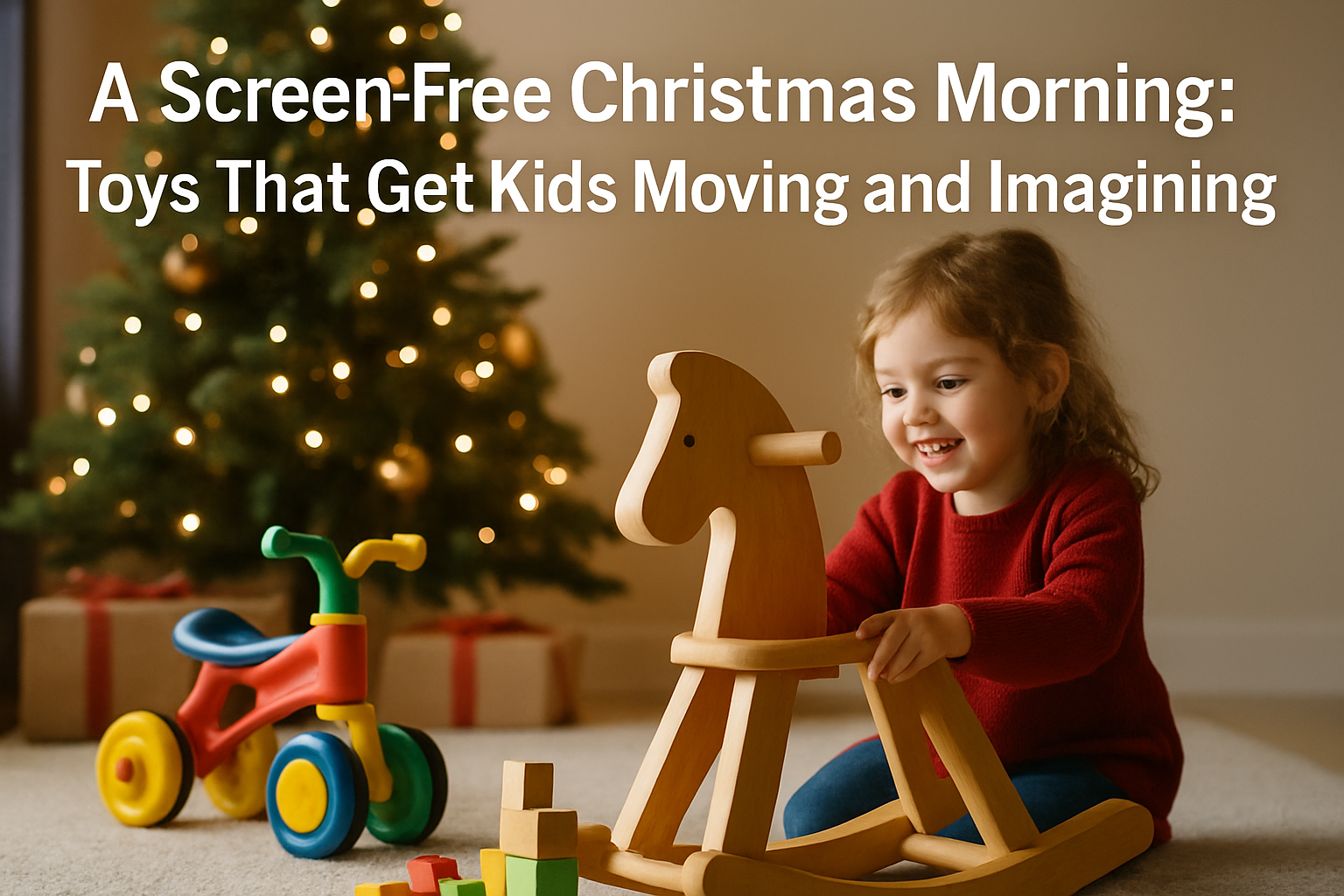

A screen-free festive environment can transform Christmas morning into a day filled with creativity, movement, and family bonding. By prioritizing toys and activities that engage children's imaginations and encourage active play, families can cultivate an atmosphere that fosters exploration and learning, free from the distractions of digital devices. This transition from screen-based entertainment to hands-on activities not only promotes a healthier lifestyle but also nurtures essential skills in development.
Engaging in screen-free play has profound benefits for children. Traditional toys that inspire creativity—such as building sets, art supplies, and outdoor games—encourage kids to think critically and solve problems through imaginative scenarios. For example, role-playing games and dress-up costumes allow children to enact diverse roles, exploring social dynamics and emotional responses in a playful context. This sort of play deepens their understanding of the world while also enhancing their language and communication skills.
Beyond creativity, the physical engagement that comes from toys designed for movement is equally vital. Active toys, such as those that promote balance and coordination, help children develop their motor skills while providing them with an outlet for energy. Playing outside with sports equipment or exploring garden activities can stimulate not just their physical health, but also their ability to interact socially and make connections with peers. In this way, screen-free play paves the way for holistic growth, balancing intellectual, emotional, and physical development in children.
By embracing a Christmas morning filled with screen-free play, families can set the tone for a joyful day characterized by meaningful interactions and unforgettable memories. Fostering an environment where imagination and physical activity thrive will not only benefit children's immediate experiences during the holidays but also lay a strong foundation for lifelong learning and creativity.
Outdoor play is essential for children’s physical and mental health. Engaging in activities outside fosters not only physical fitness but also cognitive development and emotional well-being. Fresh air, sunlight, and space to move around are vital for children as they help in developing gross motor skills, coordination, and strength. Outdoor environments also provide diverse stimuli for sensory exploration, promoting curiosity and creativity. Research has shown that children who spend more time outdoors tend to have better mood regulation and lower levels of anxiety.
Beyond physical health, outdoor play allows for imaginative adventures that are fundamental to social development. Children often create narratives during play, which helps enhance their communication skills and understanding of social structures. The presence of outdoor toys significantly contributes to this imaginative play. Well-designed toys encourage children to explore their surroundings, collaborate with peers, and express themselves creatively. Moreover, the right outdoor equipment can serve as tools for discovery, enticing kids to interact with nature and experiment, thus building their confidence.
Safety is a critical aspect when considering outdoor play equipment. Parents and guardians should evaluate the materials and structures of outdoor toys to ensure they are appropriate for children's age and capabilities. It’s crucial to choose equipment that meets safety standards and is installed properly to prevent accidents during play. Additionally, creating a safe outdoor play environment involves assessing the play area for hazards, such as sharp objects or unstable surfaces. This proactive approach not only protects children but also promotes a worry-free atmosphere for play, allowing them to fully engage and enjoy their outdoor experiences.
When selecting outdoor toys, balance bikes stand out as an excellent choice for young learners. These bikes help children improve their balance and coordination skills before transitioning to traditional bicycles. With their simple design, balance bikes encourage mobility and independence, allowing kids to explore their environment safely. Not only do they contribute to physical development, but they also instill a sense of achievement and confidence in young riders.
Outdoor climbing structures are another impactful tool for promoting physical activity. These structures encourage children to engage in climbing, jumping, and playing, significantly enhancing their strength and agility. As kids navigate climbing frames, they also develop problem-solving skills while interacting with peers, fostering teamwork and social skills. Proper supervision and ensuring that climbing equipment is age-appropriate are vital to ensuring a safe and enjoyable experience.
Family-oriented games like cornhole or giant Jenga provide interactive fun for all ages. Such games can engage family members in healthy competition while enhancing coordination and team-building skills. These activities can be enjoyed during picnics or get-togethers, promoting laughter and creating lasting memories. Similarly, creative beach toys can inspire imaginative play, allowing children to construct sandcastles or engage in imaginative scenarios by the water. Furthermore, introducing water toys like inflatable pools offers sensory activities that keep children cool during warmer months while supporting their exploratory nature. By incorporating these toys into outdoor play, families can help foster a lifelong love for activity and creativity in their children.
Imaginative play serves as a vital aspect of childhood development, allowing children to create and explore diverse scenarios. This type of play can be defined as a spontaneous and unstructured form of play where children use their imagination to role-play, construct stories, and embark on adventures that exist only in their minds. The significance of imaginative play lies in its ability to foster creativity, allowing children to approach problems from different angles and think outside conventional boundaries. Engaging in such activities lays the groundwork for innovative thinking, a skill that benefits children throughout their lives.
Moreover, imaginative play significantly promotes emotional development and social skills through collaboration and shared experiences. When children engage in role-play with peers, they find themselves navigating social norms and expectations. This process involves negotiation and cooperation, helping children develop critical social understanding. They learn to express their emotions appropriately, empathize with others, and resolve conflicts, all of which are essential components of their emotional intelligence. By immersing themselves in the roles of different characters, children gain insights into diverse perspectives, which further enhances their capacity for empathy and interaction.
Additionally, imaginative play plays a crucial role in language development and cognitive skills. During these interactive scenarios, children often articulate their thoughts and emotions, boosting their vocabulary and communication skills. They learn to formulate complex sentences and express themselves clearly, which directly impacts their literacy and overall school performance. Furthermore, by engaging in storytelling and role-playing, children enhance their cognitive abilities as they strategize, solve problems, and make choices within their imaginative constructs. This cognitive engagement is instrumental in shaping their reasoning and decision-making skills as they grow.
The choice of toys can greatly influence the extent and quality of imaginative play. One category that stands out is dolls and realistic playsets, which provide children the opportunity to immerse themselves in role-play scenarios. These toys can replicate everyday life situations—such as cooking in a toy kitchen or shopping in a toy store—allowing children to act out familiar experiences. Through this kind of play, children not only explore their immediate surroundings but also experiment with different social roles, which can lead to deeper understanding and interpersonal skills.
Dress-up costumes are another effective way to foster creativity and activity among children. When children dress up as their favorite characters, they open the door to countless adventures limited only by their imagination. Costumes encourage unstructured play, allowing kids to inhabit different personas and explore a variety of narratives. This versatile play strengthens their self-expression and creativity while enhancing coordination and motor skills through active engagement in pretend scenarios.
Moreover, building blocks and construction sets offer a unique angle to imaginative play by combining creativity with problem-solving. Children can construct anything from simple shapes to intricate structures, stimulating their spatial awareness and cognitive skills. When they engage with these toys, they experience trial and error, learning to address challenges and improve their designs. This form of play not only nurtures creativity but also teaches perseverance and adaptability—qualities invaluable for lifelong learning and growth. Through the combination of these toys, children can create engaging narratives that promote a lifetime of imaginative exploration and cognitive development.
Exploring the world through play is essential for children's physical and mental development. Creative toys designed to promote physical activity serve as powerful tools that inspire movement and exploration. These toys encourage children to engage their bodies actively, fostering not only physical health but also cognitive growth. As children run, jump, and maneuver through different activities, they learn to navigate their environment and develop a sense of body awareness. Physical activity toys cultivate a love of movement, instilling lifelong habits of fitness and fun.
Active toys provide significant benefits for children’s core strength and coordination. When children engage with these toys, they build foundational motor skills that are crucial for tackling more complex physical challenges later in life. For instance, balance-oriented toys improve stability and core strength, while those that require jumping or running boost cardiovascular health. Furthermore, the enjoyment derived from play can enhance motivation, making children more enthusiastic about being active. This interaction creates positive associations with physical activity, helping children to view movement as an enjoyable part of daily life rather than a chore.
There are a variety of creative toys that serve to promote these crucial aspects of development. Balance beams and mini trampolines, for instance, are excellent examples of toys that can significantly enhance a child’s coordination and balance. These tools allow children to experiment with movement in a safe environment, offering opportunities for risk-taking within manageable limits. Additionally, classic outdoor games such as jump ropes and hula hoops engage children in rhythmic activities that can be both entertaining and physically demanding. These toys not only encourage physical exercise but also create opportunities for social interaction, as children often play together, developing teamwork and communication skills.
When considering options for toys that promote physical activity in young children, adjustable basketball sets also play a valuable role. These sets are designed to grow alongside the child, accommodating various skill levels. As children learn to shoot hoops, they not only develop their hand-eye coordination but also practice important principles of timing and spatial awareness. This type of active play nurtures a sense of accomplishment and strengthens confidence, empowering children as they master fundamentally fun skills. Overall, the integration of creative toys that promote physical activity into playtime is essential for fostering healthy habits and holistic development in children.
Creating a screen-free environment during the holiday season can transform family time into memorable experiences. To start, it’s essential to set clear goals for family activities that will encourage everyone to engage and connect without screens. Involving children in the planning process promotes excitement and a sense of ownership. Whether it's deciding on holiday crafts, baking projects, or family games, giving kids a voice can lead to more enthusiasm and cooperation. This inclusion fosters a collaborative spirit, making the journey to a screen-free holiday feel more like a family adventure.
Designating specific times and areas in your home as screen-free zones is another effective strategy. This can be particularly beneficial during mealtimes or when engaging in family games, as it encourages everyone to be present and interactive. By establishing these zones, families can encourage conversations, storytelling, and shared laughter, which are vital components of building strong family bonds. As screens often become background noise in daily life, creating these dedicated spaces allows for intentional focus on each other, facilitating deeper connections.
Furthermore, creating engaging family routines around meals and activities can help maintain a screen-free atmosphere. Consider making it a tradition to enjoy family dinners together, where everyone shares highlights from their day. You might also incorporate game nights or craft sessions that allow for creative expression without digital distractions. As these activities become part of your routine, they will not only provide enjoyable alternatives to screen time but will also become cherished traditions that everyone looks forward to each year.
Encouraging kids to play outdoors is integral to a successful screen-free holiday. Making outdoor play a prerequisite for screen time establishes a healthy balance that prioritizes physical activity and exploration. For instance, families can outline conditions where outdoor play must occur before any screen time is granted, effectively promoting a more active lifestyle among kids. This strategy helps children recognize the value of outdoor engagement and can lead to longer plays when they understand the rewards awaiting them.
Incorporating short play increments into daily life can also seamlessly integrate outdoor activity into family routines. Activities like walking the dog, jumping on a trampoline, or playing tag in the yard can be emphasized as good alternatives to screen time throughout the holidays. Making these activities engaging and feel like fun adventures can often lead to a natural reduction in screen usage. The key is consistency and ensuring the activities are varied enough to maintain interest and excitement.
Planning family outings that focus on outdoor activities such as hiking or picnicking can further nurture the screen-free environment you desire. These outings not only provide an opportunity for physical exercise but also facilitate quality time together. Exploring a nearby park or nature reserve can offer a refreshing break from routine while instilling a love for nature in children. Such experiences can foster family unity and create lasting memories that enhance relationships beyond the screen.
Engaging kids in outdoor activities can be both fun and creative with a variety of DIY games that not only entertain but also encourage physical activity. One great game to start with is beach ball bowling. To set this up, gather a few empty plastic water bottles and a beach ball. Arrange the water bottles in a triangle formation, similar to traditional bowling pins. Kids can take turns rolling the beach ball toward the pins, aiming to knock them down. This simple yet exciting game can be easily adjusted by increasing the distance from which players roll the ball or adding obstacles to make it more challenging. It's a fantastic way for children to develop their hand-eye coordination while enjoying the outdoors.
Another classic DIY game is giant Jenga, which provides hours of fun for kids and adults alike. To create your own set, use wooden boards cut into uniform blocks. The size of the blocks can be customized based on the age group of the players. Stack them in rows, alternating the direction of each layer, and take turns pulling a block from the tower and placing it on top. The thrill builds up as the tower gets taller, creating an exciting challenge that can be played on various surfaces outside. Kids will love the suspense of trying to keep the tower from falling while enjoying friendly competition with family and friends.
In addition to bowling and Jenga, setting up a ring toss game is an excellent option for family fun. To make this game, you can craft rings using rope or even paper plates, and create targets using bottles or pegs placed at different distances. Players can compete to see who can toss their rings around the targets. This game encourages precision and focus as children aim to score points with each successful toss. Alternatively, building a DIY Plinko board can also bring hours of excitement. A simple board with a slanted surface where marbles or discs can drop through pegs creates a thrilling descent to the bottom slots. Each slot can represent different point values, making this game not only entertaining but also a great way to teach kids about scoring and strategy.
For those looking to incorporate more outdoor activities, consider setting up mini-golf using materials you have at home. Create your own putting greens with cardboard or foam, and use cups as holes. Add various obstacles made from boxes or toys to increase the challenge. Similarly, cornhole can be set up in any backyard by constructing your own boards and tossing beanbags into holes. Both of these games encourage teamwork, strategy, and light-hearted competition in a friendly outdoor setting. By engaging children in these DIY outdoor games, you foster creativity and collaboration, making for a memorable experience that encourages them to enjoy active play in nature.
Active play is essential for children’s physical, mental, and emotional development. As the holiday season approaches, finding the perfect gift that encourages kids to stay active can be both fun and rewarding. Gifts that stimulate learning, foster family bonding, and promote physical activity are key considerations when selecting the perfect holiday present.
One of the best ways to engage kids in active play is through imaginative and creative activity kits. These can range from art and craft projects that require physical engagement to science kits that incorporate movement and exploration. By providing children with a toolkit that encourages them to create, build, and experiment, parents can stimulate their natural curiosity. Such kits can include outdoor scavenger hunts or DIY projects that require active participation, inviting children to learn through hands-on experiences. This not only keeps them entertained but also fosters essential life skills like problem-solving, teamwork, and self-confidence.
Experience gifts are another excellent option for promoting family bonding through activities. These gifts could involve tickets for outdoor adventures, family passes to activity zones, or classes that piqué children’s interests, such as dance, sports, or martial arts. By participating in these experiences together, families can create lasting memories while reinforcing the importance of an active lifestyle. Moreover, shared activities can strengthen family ties, encouraging communication and collaboration. These experiences are not just gifts; they are opportunities to grow closer as a family while embodying healthy habits that children can carry into adulthood.
Lastly, sports equipment that encourages physical activity can significantly enhance a child's playtime. Whether it’s a set of roller skates, a soccer ball, or jump ropes, sports gear motivates kids to engage in physical activities, promoting cardiovascular health and coordination. Participating in sports helps children build skills, instill discipline, and develop a love for exercise. Furthermore, introducing children to team sports or individual activities can encourage social interactions and teach vital social skills, such as teamwork and leadership. Ensuring that active play is a regular part of a child's routine can help establish a foundation for lifelong fitness.
Through these carefully selected gift ideas, parents can contribute to building a more active lifestyle for their children, nurturing their physical abilities, creativity, and family bonds.
Celebrating the holidays away from screens can be a rewarding experience that fosters creativity and connection. Toys that inspire movement and imagination are at the heart of this approach. Selecting gifts that promote physical activity encourages children to explore their environment, helping develop their motor skills and coordination while fostering a lifelong love for movement. Imaginative play is equally important, as it allows children to express themselves creatively, solving problems and building narratives. By prioritizing toys and activities that engage the body and mind, families can create a vibrant atmosphere filled with joy and laughter.
As we embrace this screen-free holiday season, it’s essential to consider activities that engage all family members. Board games and craft projects are excellent ways to gather everyone around the table, sparking conversations and laughter. Such interactive experiences not only strengthen family bonds but also help develop critical social skills in children, such as teamwork and communication. By sharing in these moments, families can cultivate a warm environment where memories are made and cherished long after the holiday season has passed.
Ultimately, creating joyful, engaging experiences during the holidays revolves around prioritizing connections over consumption. By thoughtfully choosing toys and activities that encourage movement and creativity, families can craft a holiday experience that stands apart from the digital distractions that often dominate. Taking the time to nurture relationships through engaging play will not only enrich the holiday season but also inspire a mindset of playfulness and imagination that lasts throughout the year. Let's celebrate this special time by fostering environments that respect traditional values while embracing the potential for growth and exploration through screen-free experiences.


Introduction to Screen-Free PlayA screen-free festive environment can transfo...

Introduction to Screen-Free PlayA screen-free festive environment can transfo...